World Book
Kosovo
Introduction
The Ottoman Empire controlled Kosovo from 1389 to 1912, when it once again became part of Serbia and then part of Yugoslavia in 1945. In 1999, Belgrade's brutal counterinsurgency campaign against the Kosovo Albanians resulted in a NATO military operation that ended the conflict. Kosovo declared its independence in 2008 and formally applied for EU membership in 2022.
Neighboring countries
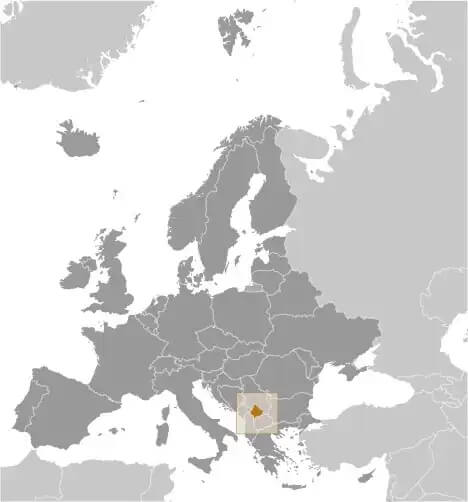
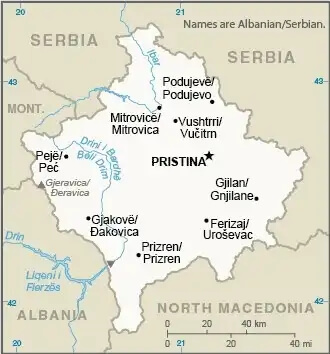
Albania - Montenegro - North Macedonia - Serbia
Geography
Area
total : 10,887 sq km
land: 10,887 sq km
water: 0 sq km
Climate
influenced by continental air masses resulting in relatively cold winters with heavy snowfall and hot, dry summers and autumns; Mediterranean and alpine influences create regional variation; maximum rainfall between October and December
Natural resources
nickel, lead, zinc, magnesium, lignite, kaolin, chrome, bauxite
People and Society
Population
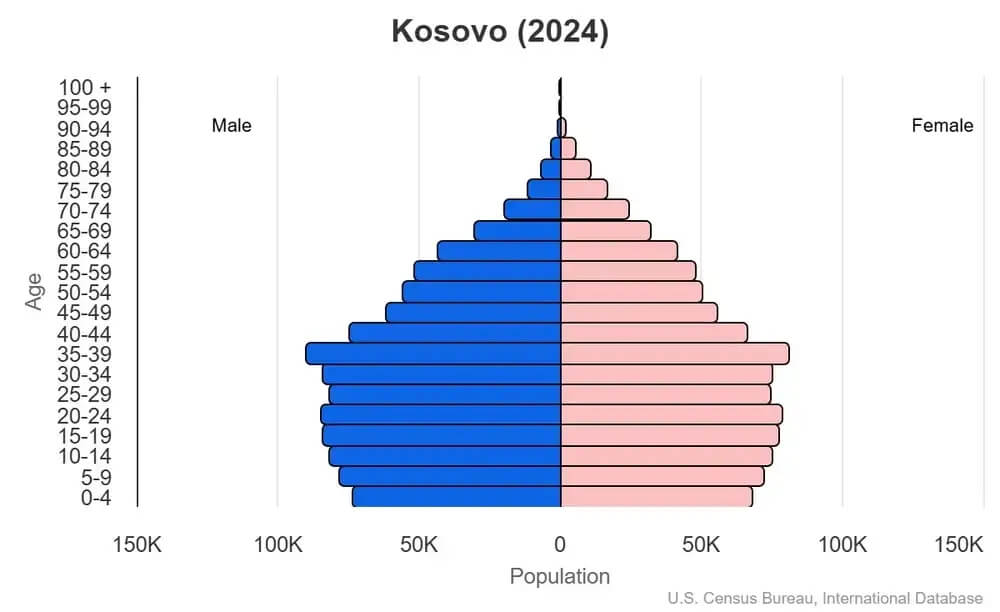
total: 1,977,093 (2024 est.)
Ethnic groups
Albanians 92.9%, Bosniaks 1.6%, Serbs 1.5%, Turk 1.1%, Ashkali 0.9%, Egyptian 0.7%, Gorani 0.6%, Romani 0.5%, other/unspecified 0.2% (2011 est.)
Languages
Albanian (official) 94.5%, Bosnian 1.7%, Serbian (official) 1.6%, Turkish 1.1%, other 0.9% (includes Romani), unspecified 0.1% (2011 est.)
Religions
Muslim 95.6%, Roman Catholic 2.2%, Orthodox 1.5%, other 0.1%, none 0.1%, unspecified 0.6% (2011 est.)
Population growth rate
0.68% (2024 est.)
Government
Government type
parliamentary republic
Capital
name: Pristina (Prishtine, Prishtina)
Executive branch
chief of state: President Vjosa OSMANI-Sadriu (since 4 April 2021)
head of government: Acting Prime Minister Albin KURTI (since 15 April 2025)
Diplomatic representation in the US
chief of mission: Ambassador Ilir DUGOLLI (since 13 January 2022)
Diplomatic representation from the US
chief of mission: Ambassador (vacant); Chargé d'Affaires Anu PRATTIPATI (since January 2025)
Economy
Economic overview
small-but-growing European economy; non-EU member but unilateral euro user; very high unemployment, especially youth; vulnerable reliance on diaspora tourism services, curtailed by COVID-19 disruptions; unclear public loan portfolio health
Real GDP (purchasing power parity)
$25.019 billion (2024 est.)
$23.962 billion (2023 est.)
$23.025 billion (2022 est.)
Real GDP per capita
$16,400 (2024 est.)
$14,200 (2023 est.)
$13,000 (2022 est.)
Exports
$4.156 billion (2023 est.)
$3.579 billion (2022 est.)
$3.138 billion (2021 est.)
Exports - partners
United States 16%, Albania 15%, North Macedonia 12%, Germany 8%, Italy 8% (2021)
Exports - commodities
mattress materials, iron alloys, metal piping, scrap iron, building plastics (2021)
Imports
$7.362 billion (2023 est.)
$6.661 billion (2022 est.)
$6.128 billion (2021 est.)
Imports - partners
Germany 13%, Turkey 13%, China 10%, Serbia 7%, Italy 6% (2021)
Imports - commodities
refined petroleum, cars, iron rods, electricity, cigars, packaged medicines (2021)